Loading...
Serving Fond du Lac, WI and surrounding areas. (920) 375-8490
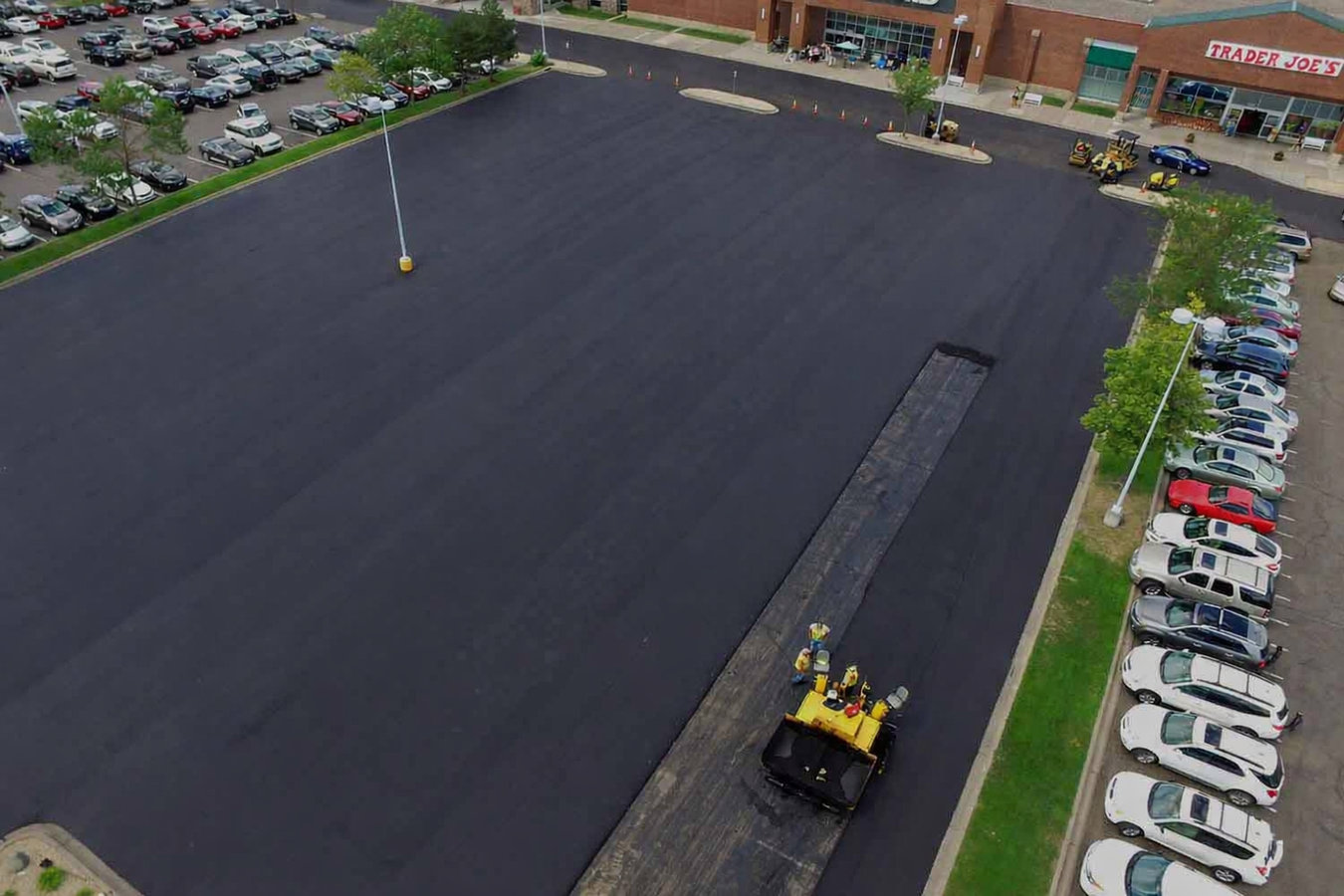
A parking lot that cracks every spring is not a surface problem - it is a base problem. We excavate, grade, and pour to Wisconsin standards so your lot holds up through decades of freeze-thaw cycles.
Concrete parking lot building in Fond du Lac means removing the existing surface, grading the ground so water drains away from buildings and drains correctly, placing a compacted gravel base, setting steel reinforcement, and pouring a thick concrete slab - most mid-sized lots take one to two weeks from demolition through curing.
If you are managing a commercial property, expanding a business, or converting a gravel lot to a hard surface, the decisions you make during construction determine whether that lot lasts two decades or two winters. Fond du Lac's glacially deposited clay soils hold moisture and shift more than sandy ground - a contractor who shortchanges the base preparation is handing you a repair bill in a few years. We also handle concrete driveway building for residential projects that need the same level of preparation and care.
Every commercial paving project we take on is permitted through the City of Fond du Lac. The permit triggers inspections that give you a documented record the work was done to code - protection that matters for your liability and your property value.
Large cracks, raised sections, or chunks of pavement that have shifted out of place are a sign the surface has been damaged by Fond du Lac's freeze-thaw cycles. Small cracks can sometimes be patched, but widespread cracking or heaving usually means the base underneath has failed and a full replacement is the more cost-effective long-term solution.
Standing water on a parking lot surface is a warning sign that drainage was not designed correctly or has degraded over time. In Fond du Lac's climate, pooled water that freezes overnight creates a safety hazard and accelerates surface damage. If puddles do not drain within an hour or two of a rain, the lot's slope or drainage system needs attention.
When the top layer of the pavement flakes off in patches - a condition called surface scaling - it tends to spread and worsen each winter. Older lots exposed to road salt and repeated freeze-thaw cycles are especially prone to this. If more than a quarter of your lot's surface looks rough, pitted, or is actively flaking, resurfacing or replacement is worth pricing out.
Many older commercial and residential properties in the Fond du Lac area still have unpaved or gravel parking areas. If your lot turns to mud every spring, develops ruts, or is difficult to maintain, converting to concrete eliminates those problems permanently and adds real value to the property.
We build new concrete lots from the ground up and replace failing asphalt or gravel surfaces throughout the Fond du Lac area. Every project starts with a site assessment to evaluate soil conditions, drainage, and what the lot will need to hold up under its expected traffic load. For lots that will see heavy vehicles - delivery trucks or commercial equipment - we specify the right concrete thickness and rebar layout from the start, not as an afterthought. Projects that involve structural elements adjacent to the lot, like perimeter curbing or retaining features, can be coordinated with our concrete footings work so the whole scope is handled by one crew.
For property owners who need a smaller paved surface rather than a full commercial lot, our concrete driveway building service covers residential and light-commercial paving where the same base preparation and drainage principles apply. If you are not sure which scope fits your project, a site visit will give us what we need to point you in the right direction.
Ideal for commercial properties, rental buildings, or businesses converting a gravel or dirt area to a permanent, finished concrete surface.
For properties with cracked, heaved, or scaled existing pavement that needs to be removed and rebuilt from the base up.
Suited for businesses or landlords adding parking capacity to an existing paved area, with new sections matched in thickness and drainage slope.
For lots where pooling water is the core problem - we regrade the base and redesign the surface slope before pouring new concrete.
Fond du Lac averages more than 100 freeze-thaw cycles per year. That means the ground under any paved surface repeatedly freezes solid and thaws out - all winter and into spring. Without a properly compacted base and correctly spaced control joints, a concrete lot will crack and heave in response to that movement. Much of the Fond du Lac area sits on glacially deposited soils - clay, silt, and sand left behind by the last ice age. Clay-heavy soils hold moisture and shift more dramatically during freeze-thaw cycles than sandy or gravelly soils, so base preparation here matters more than it would in many other parts of the country. You can read more about cold-climate concrete best practices from the American Concrete Pavement Association.
Road salt and deicing chemicals used heavily throughout Fond du Lac winters are also a real concern. Salt accelerates surface scaling - the flaking of the top layer of concrete - especially in the first year or two after a pour. We account for this in our mix design and sealing recommendations. We serve properties across Fond du Lac and regularly work in nearby communities like Beaver Dam and Oshkosh where similar soil and frost conditions shape every project.
Tell us what you are working with - the size of the area, what is currently there, and what kinds of vehicles will use the lot. We reply within one business day and will let you know if we need a site visit before giving you a number.
We walk the property to check existing soil conditions, drainage, and truck access for the pour. After the visit you receive a written estimate that breaks out demolition, base prep, materials, labor, and permit fees - no surprises.
We pull the required permit from the City of Fond du Lac before any work begins. Once approved, the crew removes the existing surface, excavates to the right depth, and compacts a gravel base - the step that determines whether your lot lasts decades or years.
On pour day, concrete trucks arrive and the crew finishes the slab the same day, cutting control joints before the concrete sets. Plan on keeping vehicles off the surface for at least a week - heavy trucks need closer to a month. We walk the finished lot with you before we leave.
We handle permits, drainage planning, and base prep - tell us what you need and we will give you a straight written estimate.
(920) 375-8490Fond du Lac's clay soils and 100-plus freeze-thaw cycles per year demand deeper excavation and a thicker compacted base than you would need in a warmer state. We design our base prep for the conditions here - not a generic spec sheet. That is what keeps a lot level after its first few Wisconsin winters.
Commercial paving work in Fond du Lac requires a city permit, and projects that affect stormwater drainage may need additional review. We manage the application and coordinate inspections so you are never in a position where work is buried before it has been checked. You receive documentation that the work met local standards.
A parking lot that pools water is dangerous in winter and destructive to the concrete underneath. Every lot we build is graded with a deliberate slope so snowmelt and rain move away from your building and toward drains - not into your foundation. The American Concrete Pavement Association recommends a 1 to 2 percent slope as the standard for proper drainage.
We give you a written breakdown that covers demolition, base material, concrete, reinforcement, permits, and any drainage work - before you commit to anything. You should never have to wonder mid-project whether a cost was included in what you agreed to. A low bid without a clear scope is not a deal; it is a setup for a larger bill later.
A concrete parking lot is a long-term investment. Get it right from the base up and you are looking at decades of low-maintenance use. Cut corners on the prep and you are back to pricing repairs before the lot has a chance to pay for itself. We build for the long run.
Structural footings dug below the frost line for decks, additions, and accessory structures - the buried foundation every surface build depends on.
Learn MoreResidential and light-commercial driveways built with the same base-first approach - right for properties that need a smaller paved surface than a full lot.
Learn MoreSpring construction slots fill fast - reach out now so your project is scheduled before the busy season books up.